

A garden is more than a place to grow food or flowers. It is a reflection of the gardener, a mirror of how we move through the world. Some people thrive on neat rows and precise order, others on wild abundance and color spilling across pathways. The way you lay out a garden can shape not just what grows, but how you feel while tending it. If your goal is peace — a garden that feels like a sanctuary as much as a source of harvest — the layout is where that peace begins.
Start with flow, not perfection
Many garden guides begin with blueprints: raised beds aligned with the compass, paths measured to the inch. But peaceful growing isn’t about rigid control. It’s about flow. Notice how you naturally move through the space. Do you like winding paths that encourage wandering, or direct lines that make chores efficient? Do you want a central gathering point, like a bench or a birdbath, or do you prefer corners that invite solitude? Sketch loosely, but let the layout follow your own rhythms rather than a template.
Paths that invite wandering
A peaceful garden is one you want to linger in. Paths are as important as plantings. Wide, straight paths are practical for wheelbarrows and heavy work, but adding a curved walkway through flowers or herbs encourages slow steps. Lining a path with lavender or thyme creates both fragrance and softness underfoot. If you’re working in a tiny space, even a simple stepping-stone trail can create the sense of journey, turning a few feet of earth into a place of retreat.
Zones of purpose, zones of rest
Divide your garden not just by what plants require, but by how you want to use the space. You might keep the vegetables in raised beds near the kitchen door for easy access, while herbs and flowers fill a separate corner dedicated to rest and beauty. A small seating area tucked among tall sunflowers or bean poles can create a pocket of privacy. Peaceful growers know that a garden is not just for production — it’s also for the spirit.
Raised beds and circles
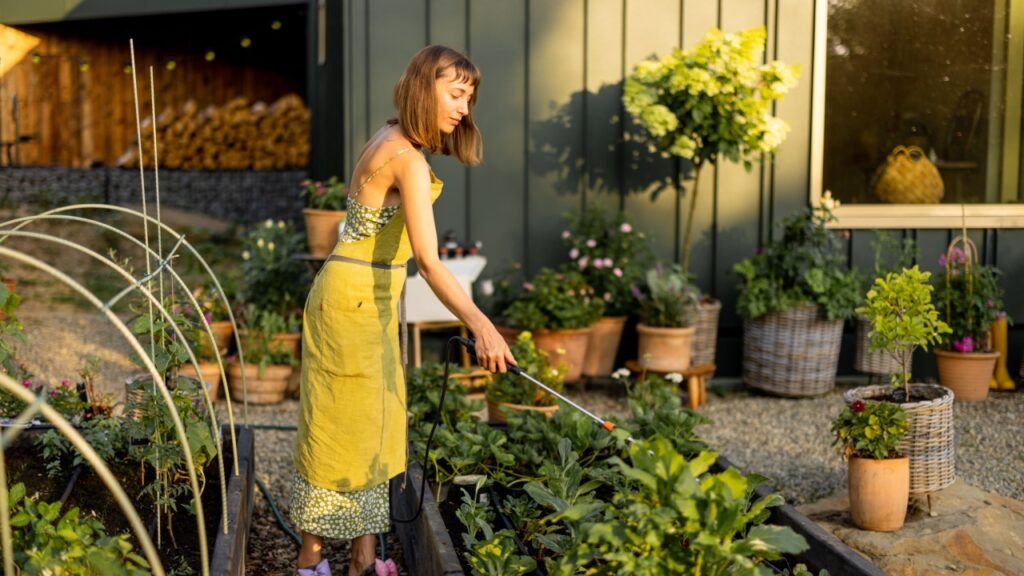
Raised beds offer control and neatness, but they don’t have to be lined up in military rows. Consider arranging them in a circle or a U-shape, with space in the middle for sitting. This layout fosters both community — a natural place to gather — and solitude, a little arena of calm where plants rise around you like quiet companions. In a small space, even three beds arranged in a half-moon can shift the feeling from utility to sanctuary.
Inviting the senses
Peaceful gardens engage more than the eye. Think about what you’ll smell, touch, and hear. A border of mint or rosemary offers fragrance every time you brush past. Tall grasses catch the wind and whisper. A patch of lamb’s ear invites a hand to rest. Place these plants along your usual walking routes so they become part of your daily experience, grounding you with each small encounter.
Balance between structure and wildness
One of the great lessons of gardening is balance: giving shape without stifling life. Too much structure, and the garden feels rigid, like a checklist of chores. Too much wildness, and it becomes overwhelming. Peaceful growers find a middle path. Perhaps you plant lettuces in orderly rows, but let the calendula and cosmos seed themselves freely at the edges. Or you train beans up tidy poles while allowing nasturtiums to spill in bright cascades below. This blend of order and playfulness feels both grounded and alive.
Water as a focal point
If your space allows, adding water transforms the atmosphere. A birdbath, a small fountain, even a bowl that collects rain creates sound and movement that invite stillness. Watching water ripple can be as calming as tending plants. Birds, bees, and butterflies will visit too, reminding you that the garden is part of a larger whole.

Respecting the seasons
Peaceful gardens shift with time, and their layouts should make room for that. A bed of spring greens can later hold beans or squash. A corner planted with tulips might give way to zinnias in summer. By planning for rotation and change, you align with nature’s cycles instead of fighting them. This not only nourishes the soil but also eases the gardener’s heart — a reminder that nothing needs to be permanent for it to be beautiful.
A seat for the gardener
Perhaps the most overlooked part of any garden layout is a place for the gardener to sit. A bench beneath a trellis, a chair tucked into a shady corner, even a simple overturned crate can become a sanctuary. Too often we treat gardens as work sites, forgetting they are also places to rest. Peaceful growing is as much about being as doing. A seat in the garden says, “You belong here too.”
Tending with intention
At its core, a peaceful garden is not about layout alone but about how you move through it. Do you rush to weed and water, or do you pause to notice the ladybug on the tomato vine? Layouts that nurture peace are those that invite slowness, that give you reasons to linger. Whether that’s a winding path, a tucked-away chair, or herbs brushing against your legs, the design should whisper, stay a little longer.
A garden laid out for peace isn’t necessarily the most efficient or the highest-yielding. But it nourishes something deeper. It turns tending into meditation, harvest into gratitude, and space into sanctuary. For the grower who seeks not just food but rest, the layout is the beginning of that quiet journey.





No Comments